भारत सरकार | Government of India




Balabhadrapuram Centre
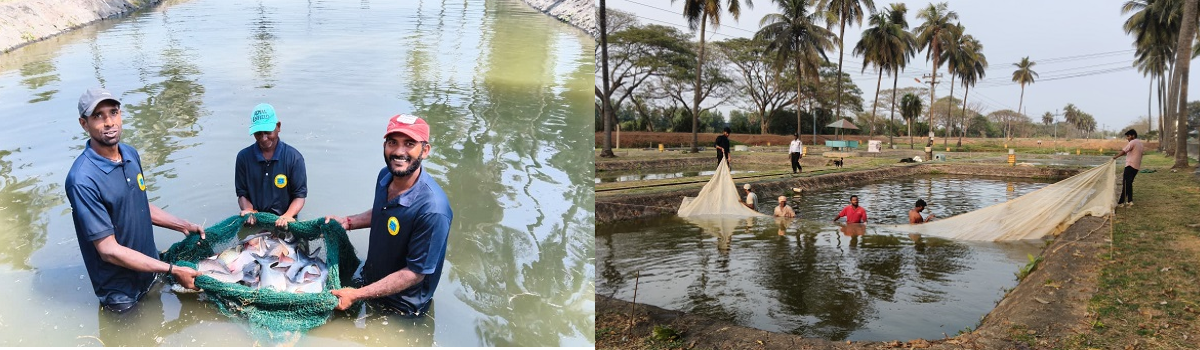
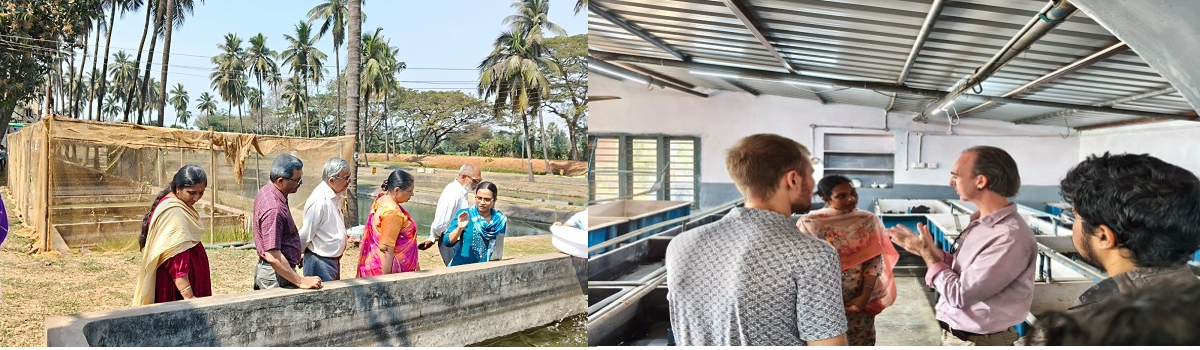
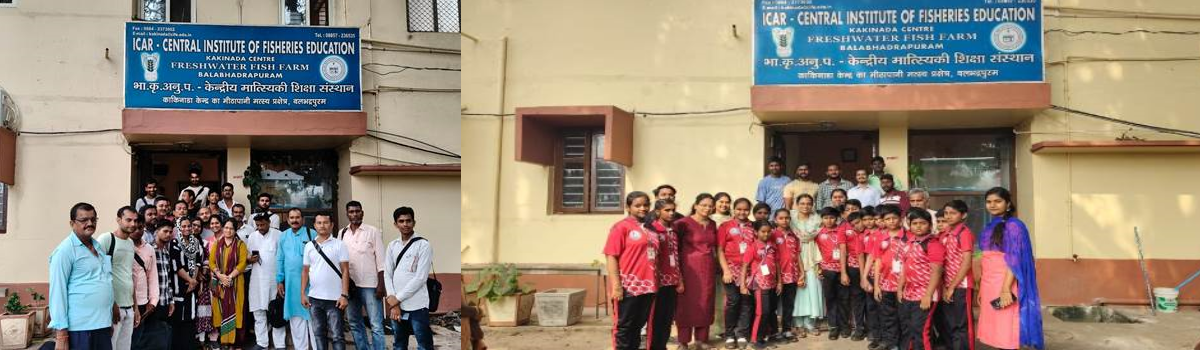
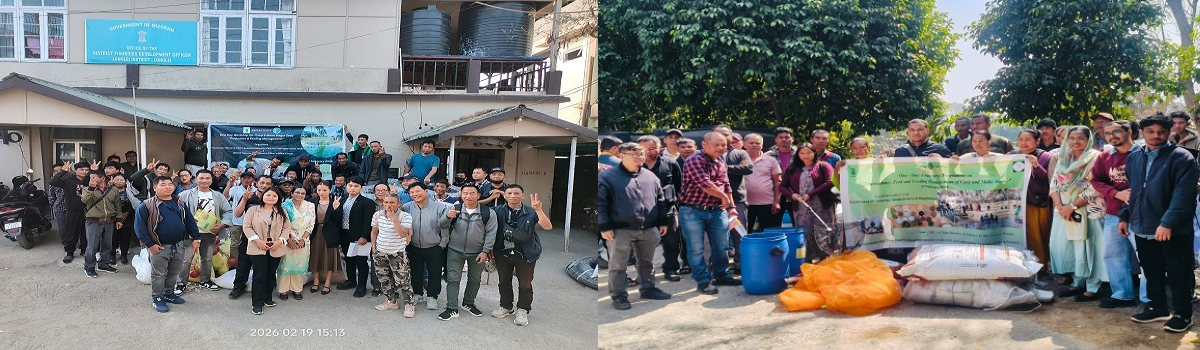
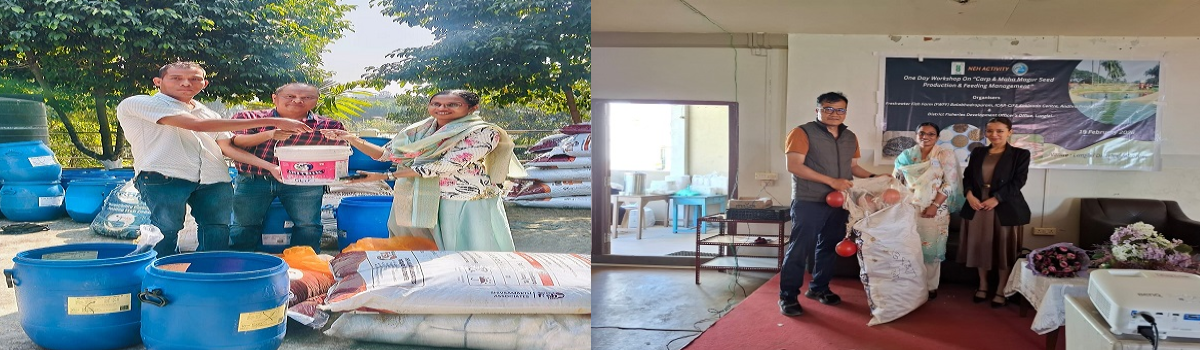
The Freshwater Fish Farm, Balabhadrapuram, functioning under the ICAR–Central Institute of Fisheries Education (CIFE), Mumbai, is a dedicated facility for research, teaching, training, and demonstration in freshwater aquaculture. Located in Biccavolu Mandal of East Godavari district, the farm is strategically situated about 20 km from Samalkot Railway Station and approximately 35 km from Rajahmundry Airport along the Kakinada–Rajahmundry Road, ensuring excellent accessibility. Spread over a water area of approximately 7.5 hectares, the farm comprises well-designed and uniformly sized ponds that support both experimental research and field-level demonstrations. The facility plays a significant role in advancing freshwater aquaculture in India, particularly in Andhra Pradesh, through capacity building and farmer-centric extension activities. Key activities of the farm include seed production and culture of carps and catfishes, murrel farming, and culture of giant freshwater prawn. The centre also provides hands-on training and technical support to farmers on various aspects of aquaculture practices, thereby strengthening field-level adoption of improved technologies. The farm has established collaborations through Memoranda of Understanding (MoUs) with local NGOs and universities, and actively contributes to aquaculture and fisheries development in the state in association with the Department of Fisheries, Andhra Pradesh. Through its integrated approach combining research, training, and extension, the Freshwater Fish Farm, Balabhadrapuram, contributes significantly to the development and dissemination of sustainable freshwater aquaculture technologies in the region.
- To conduct demand driven training program for farmers, research and development personnel, students, entrepreneurs, etc. on different aspects of freshwater aquaculture.
- To organize the field demonstrations, transfer of technology programs and advisory services on freshwater aquaculture technologies.
- To conduct need-based applied research in freshwater aquaculture.
- Climate-resilient and sustainable aquaculture systems: Development of low-carbon aquaculture practices, resource-efficient farming systems, and resilient production models to address climate variability & improve livelihood
- Innovative and sustainable aquafeed development: Research on alternative feed ingredients such as agro-industrial by-products, insect meal, microbial proteins, and fermented feed ingredients to reduce dependence on conventional resources and improve feed efficiency.
- Broodstock development and nutritional programming: Strengthening broodstock management strategies with a focus on nutrition, reproductive performance, larval quality, and epigenetic/nutrigenomic interventions.
- Genetic improvement, seed production and popularisation of Clarias magur:Expansion and dissemination of genetically improved strains with enhanced growth, survival, and disease resistance, along with standardized hatchery and nursery protocols..
- Species diversification and integrated farming systems: Promotion of diversified aquaculture including Indian major carps, catfishes, murrels, giant freshwater prawn, ornamental fishes, and eco-friendly integrated systems such as aquaponics.
- Centre of excellence for indigenous and ornamental fishes: Conservation, captive breeding, and commercialization of indigenous and ornamental species to support biodiversity and entrepreneurship.
- CIFEvruddhi: Developed a nutraceutical formulation to enhance growth performance and immunity in stunted carps.
- Maha Magur:Contributed to the development of a genetically improved strain of Clarias magur (Indian walking catfish) with superior performance traits.
- Insect Protein Hydrolysate: Standardized protocols for production and application of insect-based protein hydrolysate for use in aquafeed.
- CIFE-BSF Feed: Developed Black Soldier Fly (BSF)-based aquafeed formulations for Litopenaeus vannamei (Pacific white shrimp) and catfish, promoting sustainable and cost-effective feeding strategies.
External Funded
i. Technical backstopping and demonstration cum genetically selected Clarias magur breeding and aquaculture
ii. Demonstration and promotion of indigenous ornamental fisheries and aquaculture in Eastern Godavari region, Andhra Pradesh
Institutional Funded
iii. Genetic improvement of growth and breeding efficiency of Clarias magur through selective breeding
A)Certificate Training & Skill Development Programmes Offered
- Three-month certificate course on ‘Freshwater Aquaculture and Hatchery Management’.
- Three-month skill development certificate course on ‘Freshwater Aquaculture and Hatchery Management’.
B) Short-term Training Programmes (3-7 days):
- Advancements in carp breeding and hatchery management technologies
- Hands-on training on aqua-feed preparation and management
- Skill enhancement training on culture and seed production of Maha Magur
- Entrepreneurial skill development in Maha Magur breeding and hatchery management
- Polyculture of giant freshwater prawn and Carps
- Hands on practices on freshwater aquaculture: basics and practical aquafarm management
C) Long-term Trainings / Internships (1-4 months):
- Aquaculture experiential program: Core concepts and advanced hand on practices
- Hands on practices on freshwater aquaculture: Basics & practical aquafarm management
- In-Plant Experiential Training to BFSc Students
- Technical advisory services on freshwater aquaculture including carp, catfish, giant freshwater prawn culture, polyculture systems, integrated farming, ornamental fish breeding, and feed & feeding management.
- Entrepreneurship and project support through DPR preparation, guidance for startups/incubates, and facilitation in liaising with funding agencies.
- Hands-on training and practical exposure in basic aquaculture practices, hatchery operations, and laboratory management for students and professionals.
- Quality seed production and supply of carp and Magur (including improved varieties), ensuring reliable access to healthy seed stock for farmers and entrepreneurs.
- Community-focused support services through input supply, technical guidance, awareness programmes, and capacity-building trainings for designated and resource- limited groups.
- Back to previous page
- |
-
Page last updated date:20-04-2026 03:23 PM